
On the Southwest Chief
Train Journal, Part 1: West of the Chicken

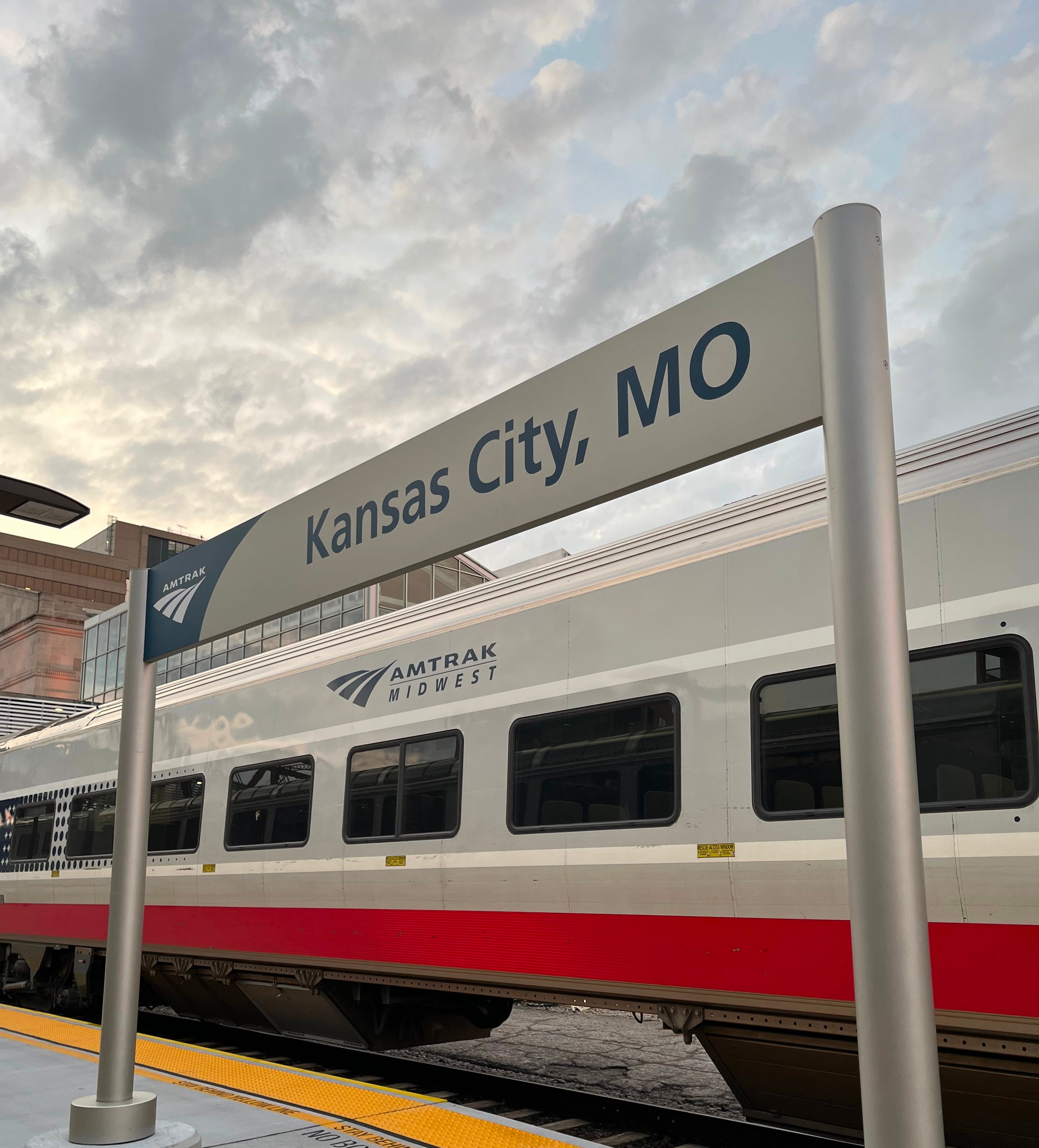
More travel journaling for your summer reading enjoyment…here’s a bit from the Amtrak Southwest Chief.
July 29 Albuquerque to Chicago
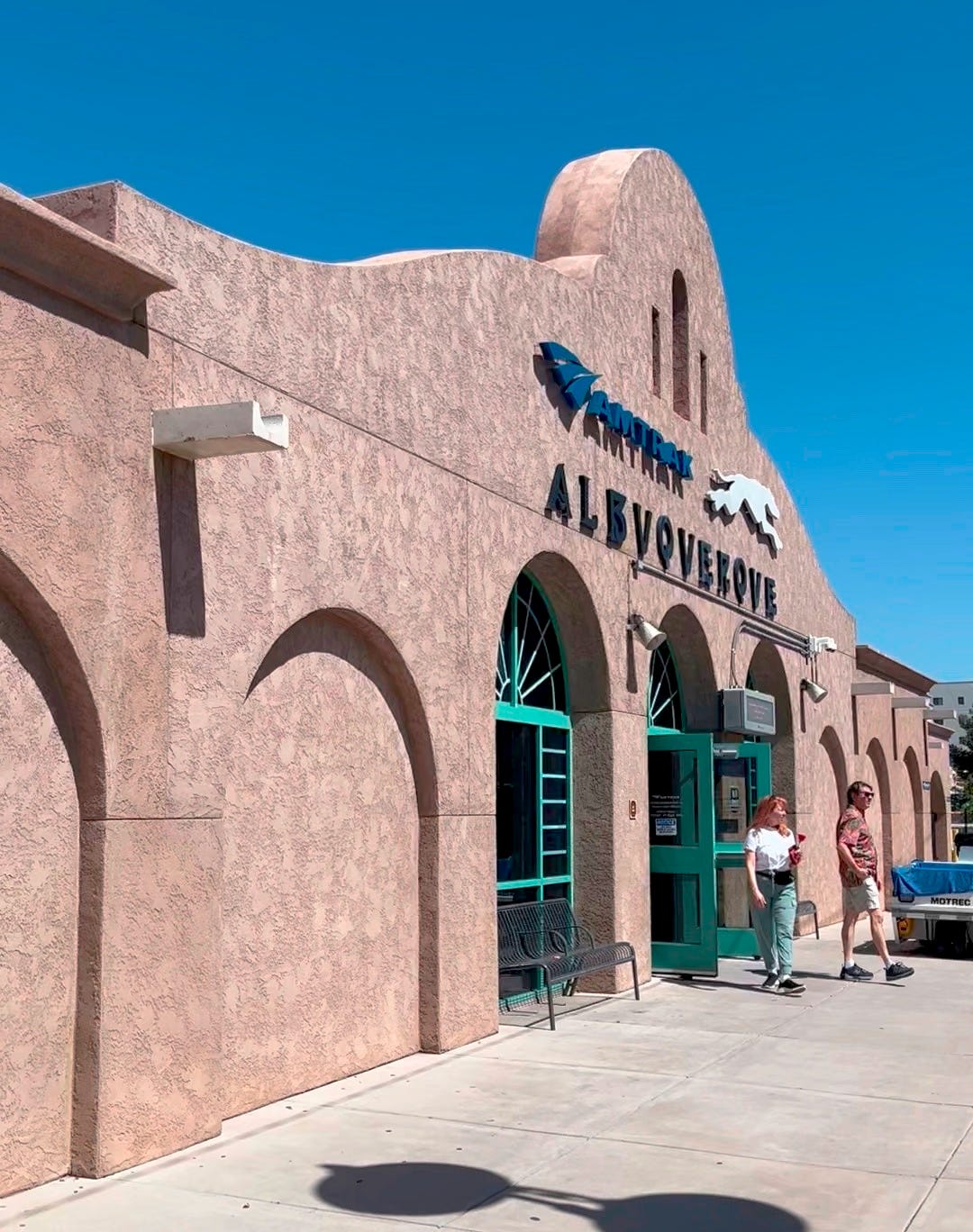
Our train approaches Lamy a couple of hours into my scheduled 26-hour journey on the Amtrak Southwest Chief. We’ll make 20 stops between Albuquerque and Chicago, passing through New Mexico, Colorado, Kansas, Missouri, Iowa and Illinois. The entire journey from Los Angeles takes a whopping 43 hours, passing through several stops in California and Arizona prior to my starting point in Albuquerque.
I’ve opted for a coach seat, eschewing the sleeper cars, which felt like a bargain at $120 one-way but now has me a little cowed. 26 hours is a long time to spend on a train. I’ve staked out the observation car for now and so far am enjoying the southwestern view - desert scrub becoming sporadic conifer forest as we climb towards Colorado. So far so good. Yet more frugal an option would’ve been a Greyhound Bus, which makes Amtrak coach class feels like the best alternative. It strikes a tone that says, I’m cheap but I’m no hobo.
I’ve never heard of Lamy, though I live not far away. I’ve never stopped in Kansas or Iowa, for that matter, nor have I ever traveled cross-country - at least by car or train. There’s a first for everything. Which I suppose makes this an adventure.
I’m thinking of another town from a long time ago, on a similarly long and winding journey, this one in China where I worked for a time as a marketing manager in a gas station business. The company was jointly operated by a Chinese oil company and my employer, one of the world’s giant petrochemical businesses (who will remain nameless but would later earn an unfortunate reputation for spilling things). It was a 50-50 JV - my side had put up the capital and the Chinese had contributed several gas stations, which were rebranded with an unsightly, mashed-up signage of the two logos (courtesy of yours truly). Personnel were mostly Chinese nationals, except for a few key management slots, like marketing. I’m not sure how I wound up in that position at such a young age, my qualifications being an MBA and an ability to communicate passably in Mandarin, and not much else. Little in the way of patience or perspective, for example, skills that really matter. I was there with my growing family, and we had a car and driver and lived in a 3-bedroom apartment on a high floor in a nice hotel. It was surreal.
Near the end of my multi-year China assignment a group of us traveled to a remote northeastern town in Heilongjiang Province called Jixi. Not surprisingly, I’d never heard of it, nor had anyone else in our party, which consisted of representatives from our organization’s major departments: sales, maintenance, IT, finance and accounting, even HR.
Our group leader to Ji Xi was Mr. Zhang, the assistant GM. Every department had a manager from one side, and because of the partnership, an assistant from the other. Literally 50-50 and honestly a bit of overkill. The GM was a small, skittishly formal Britton who loved red ties and who always appeared clean-shaven, no matter the hour. Mr. Zhang by contrast was a swashbuckler and clearly uncomfortable in the one suit and tie he wore begrudgingly day after day. Unsurprisingly the two rarely interacted.
Mr. Zhang had come of age during the Great Cultural Revolution in the 60s and 70s and was partial to holding exhausting study sessions with me, in which he would appoint himself professor and lecture me the underling on the facts of business. His main points to me seemed trivial and tangential and often differed radically from my school texts or our own corporate strategy, and he delivered them in rambling, authoritative speeches from his high-backed office chair. It was his attempt at a classic re-education, the world according to Zhang, who didn’t especially like me and generally made my time at the JV miserable. He rarely supported my promotional ideas and seemed to do whatever he could to thwart my projects. I was young and western, and to him at least an arrogant brat, with my language skills and highfalutin MBA.
To be fair to Mr. Zhang, post-revolutionary China was a turbulent time, and a lot of the 50’s, 60’s and 70’s are generally seen as equal parts disaster and progress for China and its people. He’d been caught up in a program called the Up to the Mountains and Down to the Countryside movement, when Chairman Mao sent millions of educated youth from the cities to the hinterlands, to learn from the peasants and farmers. There they spent years at agricultural hard labor, on their own, separated from their families. The Great Cultural Revolution, as it came to be known, was a re-education campaign in principal and seemed, on paper, an honest effort to break down class divides and teach humility to urban youth. Unfortunately, like its predecessor the Great Leap Forward (ca1958-62), what followed were famine, political upheaval, and a reign of terror, and history hasn’t judged the period favorably.
I for the most part despised Mr. Zhang for his coarse teachings, what I saw as backward views on business and marketing, and for knowing of his dislike for me. We mostly only like people who like us back. But I had to acknowledge his rough background, and he was nothing if not honest, based on the frequent dressings down I received over store promotions or product pricing. Everyone’s an armchair marketer.
My 9/11 experience happened on China time, about 12 hours ahead of the east coast of America, revealed Mr. Zhang at his best. I watched it unfold on the evening CNN International news broadcast, then went to sleep much later, dazed as though drunk. Zhang called me at my hotel early the next morning and offered his sincere condolences. He could’ve simply waited till I got to work, but he made a point of calling, like a head of state to a foreign dignitary, which I always appreciated. Major points for honor and sincerity, so I had to give him some respect. I wasn’t that arrogant.
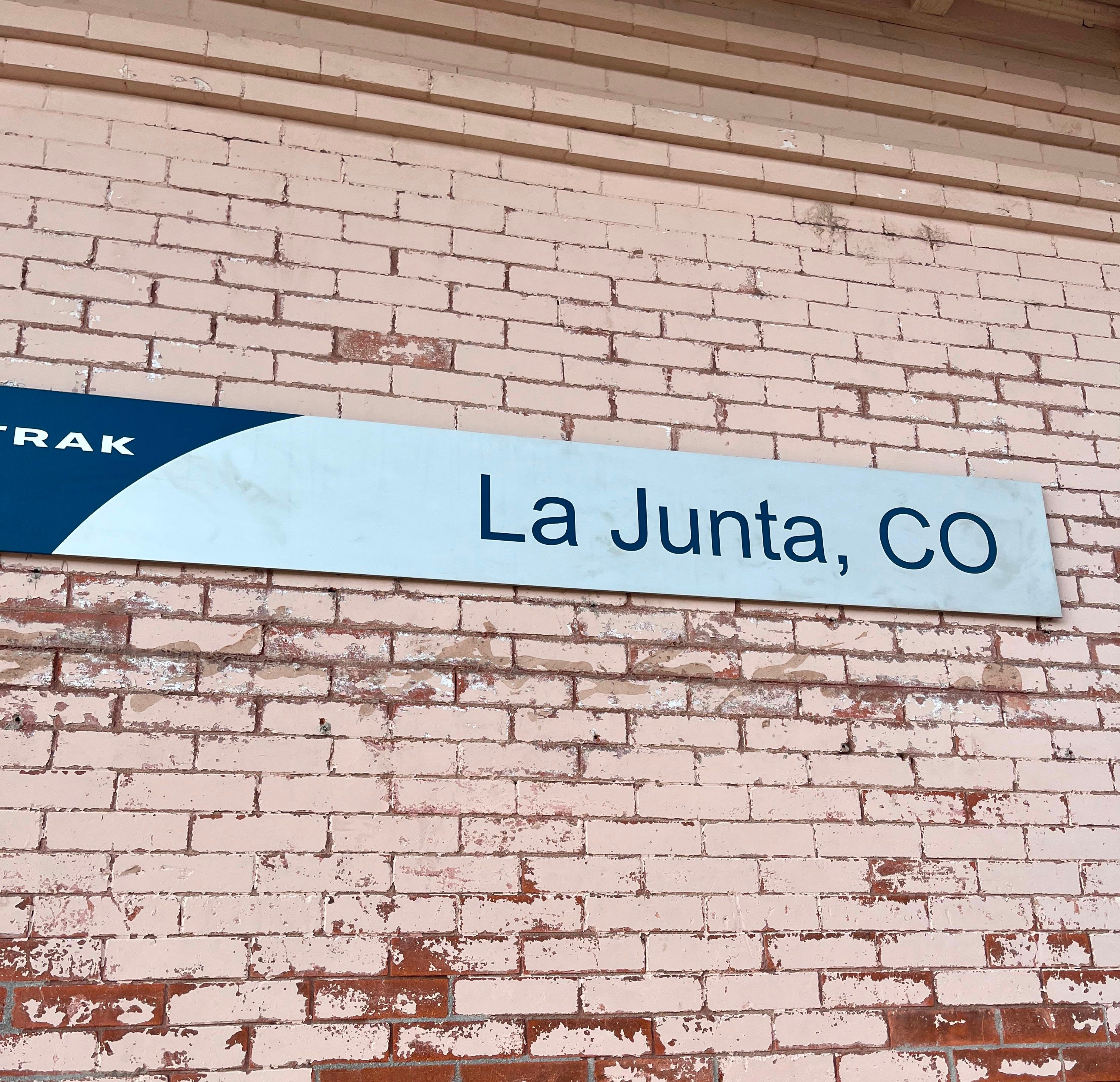
The Southwest Chief lumbers on through Colorado as dusk approaches. I’ve avoided my assigned seat in favor of the viewing car thus far, with it’s curved clear roof and cool views. At some point I’ll need to head to my spot, which is in the last row of the last car and gives me the willies. I don’t sleep well on airplanes and doubt I’ll sleep much this evening.
In fact I’ve not been sleeping too well ever since returning from China over a month ago. I’m starting a new teaching job at the high school back in Albuquerque where I sub, and it’s got me anxious. I first heard about it earlier this month: I’d been placed into a longterm role, which happens but typically with a bit of notice and at least a short conversation. Due to summer and staff shortages the advance warning didn’t happen. For the next week I tried to decipher over text messages from out of town the nature of the job. I was either to be an Inclusion English Teacher, helping out special ed students who’ve been placed into general ed classes, or else I was the Detention Officer. Which feels decidedly exclusionary to me. The job distinction on my phone app hadn’t clarified which, and I was preoccupied by the mystery.
Sleeping to me is a superpower, especially on long trips like this one. As I ponder the evening to come, I find myself staring enviously not at the passing scenery but at the heavyset man in the sofa seat next to mine. Seating in the observation car faces the windows in order to afford a better view. But the man, whose feet are propped against the plexiglass, has been snoring for a couple of hours already, his head slumped forward against his chest and his arms splayed out on both sides holding sections of the newspaper he’d been reading. He seems totally comfortable in the most improbable of sleeping positions - Amtrak yoga. Like many yoga poses, I think, here’s another one I cannot execute.
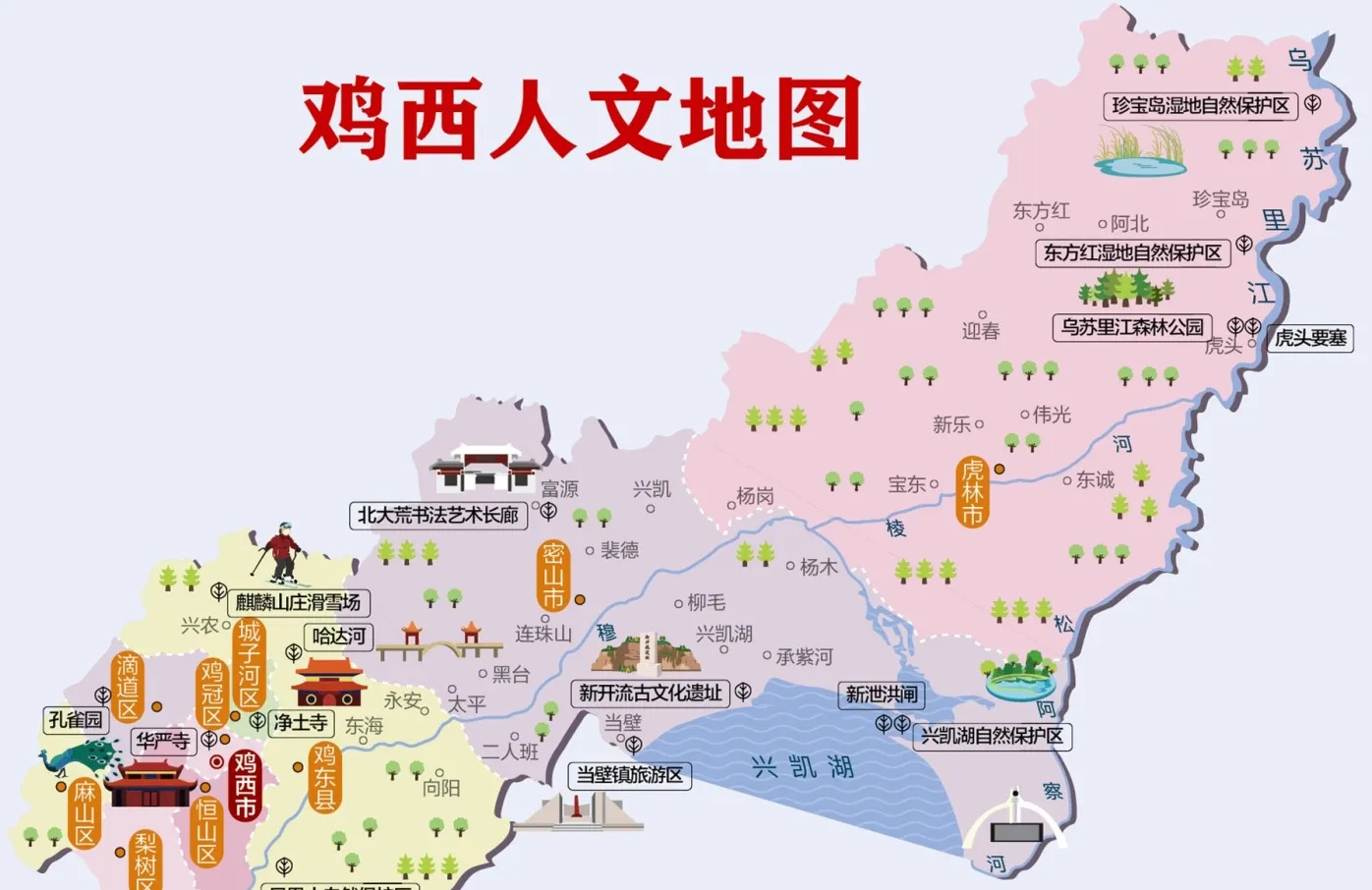
Jixi was a small town, or at a population of about 1.5 million, small by Chinese standards. The name translates literally to Chicken West, or maybe West of the Chicken. There are apparently no deeper, more elegant meanings behind the characters, like you often get with Chinese, nothing beyond a directional reference to chickens.
We’d flown into the provincial capital of Harbin, home of the famous winter “ice lights,” elaborate ice sculptures illuminated with colorful lighting and a popular wintertime tourist attraction for those brave enough to endure the cold temperatures up at the freezing 45th parallel. Our trip was in March, still quite cold in the Northeast, and deplaning onto the Harbin tarmac I remember a chilly foreboding hitting me like a cold spring wind. At the time I was emotionally on edge as Lily and I prepared to return home to America, with our brood of 3 kids, more or less for good. I’d been in China off and on for nearly a decade, a love-hate relationship that had made me paranoid, short-tempered, and distrustful. I knew it was time to go home but at the same time was nervous about the future. Anxiety, my constant companion, may have gotten to know me best in China.
Our trip had begun with conspicuous bad signs - a flight delay at our starting point in rainy, southern Guangzhou was followed by a failed takeoff attempt, where the front wheels of the plane had actually lifted off then thumped back to earth with force. Without preamble the pilot then wheeled around and made a second successful attempt, gunning the vehicle airborne and into the clouds.
While the other passengers somehow took the heaving commotion in stride, I was left clutching my armrest, my face no doubt a ghostly shade of white, the absence of color. Scuttled so near the finish line, I panicked at the time, so close to home after a vexedly long and challenging China experience, only to come to grief on a lonely Guangdong airfield. With self-pity I suddenly longed for my wife and young children as we hurdled down the runway and wished the pilot would’ve just given up and returned to the terminal. Instead, being made of sterner stuff, like Zhang, he took off at an aggressive angle, and we made our way north as scheduled.
Watching me go pale on the airplane must have been a pleasure for Mr. Zhang, who reveled in his own strong constitution and scoffed at the relative softness of western softies like me. He was a tough old bastard to be sure. He wasn’t what you’d call a family man, that American sobriquet not a thing in China at least then, and I never saw him on the phone with a wife or heard him talking about any children. He was by Chinese standards I suppose a man’s man, known for dominating late night drinking contests involving mao tai, er guo tou, and various other clear spirits, the kind sold by street vendors out of vats to customers who provided their own containers, the product measured out by the centiliter from graduated cylinders. After a night of drinking - what to him would have been merely collegial socializing - he’d be up early the following morning, the first to the office or the hotel dining room on a business trip, shaking his head at his young cohort who’d been drunk under the table the previous evening and would no doubt be showing the worse for wear as they stumbled blearily in to start their day. Wakey-wakey.
We bused to Jixi from Harbin, and I remember little of the trip after that, a string of several small towns I’d never heard of, all in China’s northern tier, the home of Mr. Zhang and his oil company. By day we visited gas stations with little to offer in the way of customer service, convenience items, safety precautions, or retailing technology (I should add that today it’s a different story). It provided to us, according to Zhang, valuable lessons in how to run a business.
By night we ate at roadside restaurants and drank beer or Chinese liquor and slept on mostly hard beds in mostly cramped hotels, two to a room. I remember a karaoke bar at one of the hotels, a downmarket establishment where our sales manager Mr Wang got too drunk and threw up into a champagne bucket, to the great embarrassment of Zhang. I took enormous pleasure that night in Zhang’s disappointment, as I belted out yet another inebriated rendition of Love Me Tender, my one and only go-to. When drunk I slurred my words and sometimes missed the urinal, but at least I didn’t vomit on my colleagues. I was glad at the time for my roommate on the trip, the sober CFO Mr. Chen, who would lull me to sleep with bedtime stories about animal husbandry and how to slaughter livestock, memorable remnants of his time in the countryside. I was confident he would never throw up on me.
The next morning in the elevator lobby I bumped into the sales manager Mr Wang, who was a genuinely nice guy. Looking peaked, he wisely skipped breakfast that day and right there outside the elevator taught me the Chinese word for exhaustion, a word I’ve never forgotten, which is pi lao.
Pi lao is a fitting way to describe the entire journey to Ji Xi, Chicken West, which thankfully came to an uneventful close two agonizing weeks later. The business would inherit most of the lousy retail locations we’d visited, out in the sticks, miles from civilization and with little except gas pumps on offer. Which should’ve been an outrage, but that’s how the game was played then. Foreign companies desperate for a Chinese foothold, and Chinese partners only too willing to take advantage.
But no matter, I was just happy it was over. I returned tired and resolved - pi lao - done with travel and done with China. At least for now, I was ready to go home, and it was the trip to Ji Xi that had steeled me for the uncertainty to come, with a young family in a new American town. At the time I’d not even lined up a job, and the whole thing felt more like a black box than a plan. Yet I was ready, hungry even for the new life to follow. And all thanks to Ji Xi - perhaps there’d been a deeper translation after all - and to Mr. Zhang. I have to hand it to him, for in the end it was, all of it, a true learning experience.
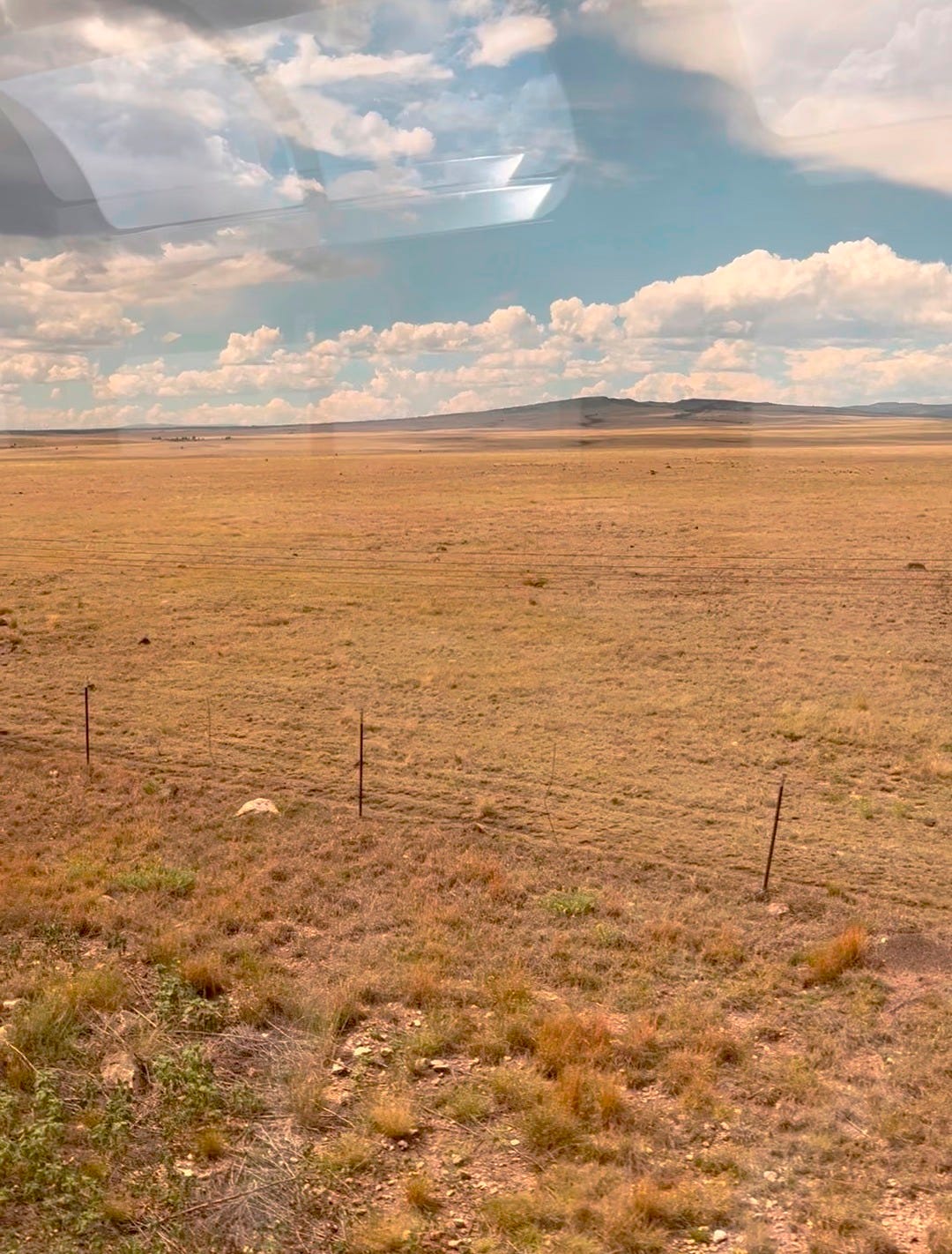
Stay tuned for more adventures aboard the Southwest Chief….
I love how you gave Mr. Zhang some grace even while hating him. I also really like the parallel stories ~ it’s not an easy technique.
Ive been consulting the Mighty Googles for historical population statistics of the Chinese cities and towns you have mentioned in your wonderful travel tales. My mind cannot wrap itself around the growth since 1989. 🤯💥🙆🏻♂️